
Wildlife
Zebras are among Africa’s most recognisable animals, yet black and white photography can make them appear unfamiliar again.
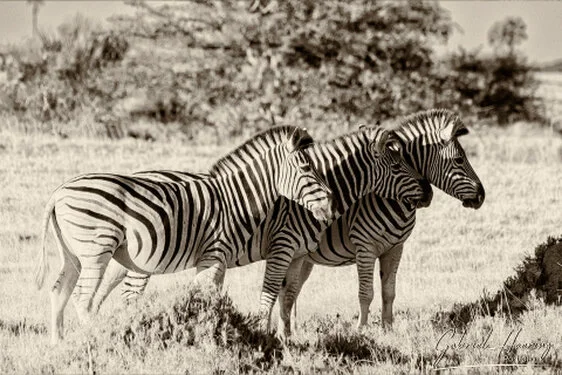
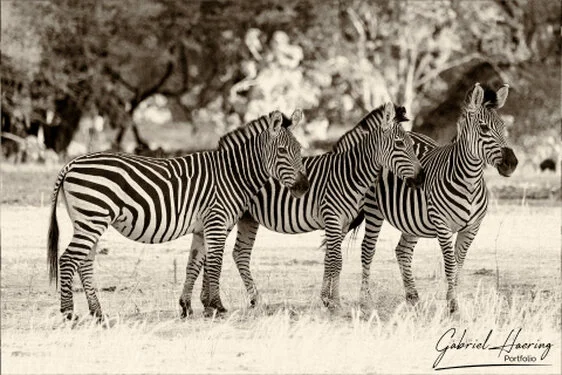
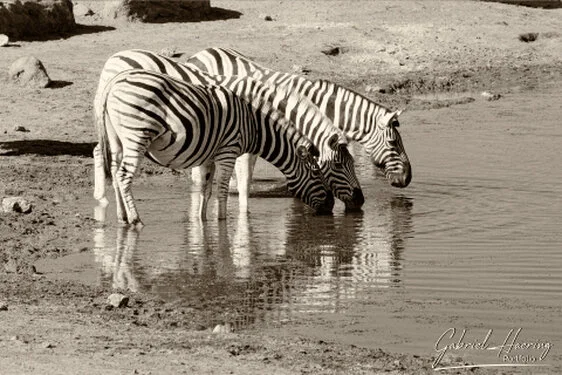
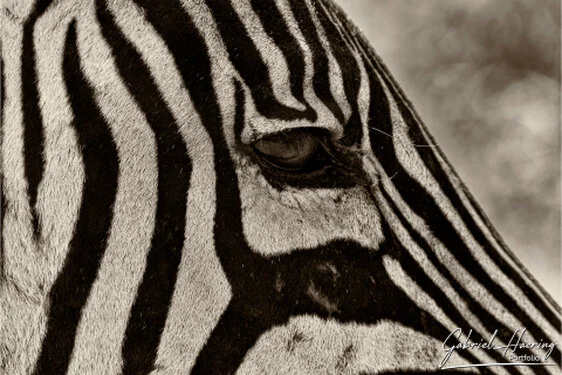
Their stripes create natural patterns that change continuously as individuals move, overlap and interact. This gallery explores zebras through contrast, rhythm, abstraction, social behaviour and their relationship with the surrounding landscape.
Pattern and Abstraction
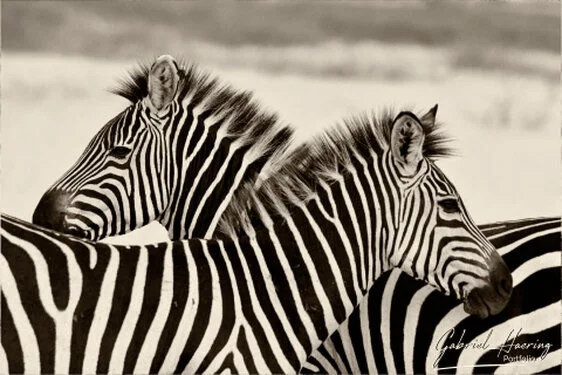
In a tightly grouped herd, individual animals can become difficult to distinguish.
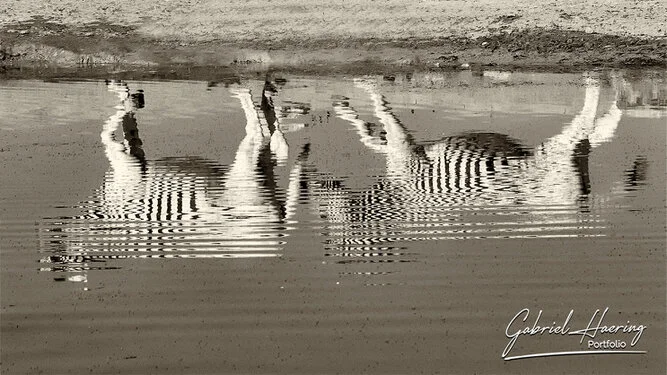
Stripes intersect and separate, producing complex graphic compositions. Heads, necks and bodies merge into patterns before re-emerging as recognisable forms.
Monochrome strengthens this visual ambiguity and turns the familiar zebra into a subject for abstract wildlife photography.
Individuality Within the Herd
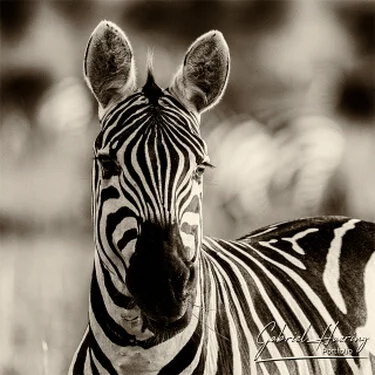
Every zebra has a unique stripe pattern, but individuality is also communicated through posture, expression and behaviour.
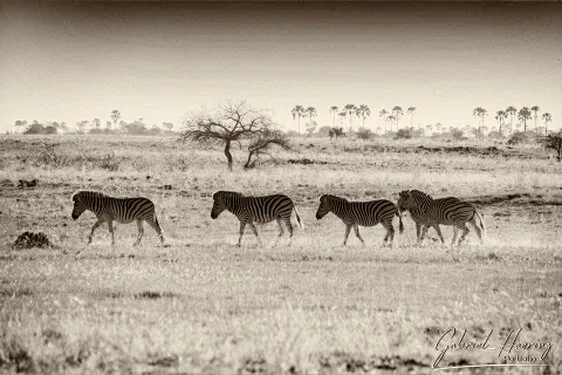
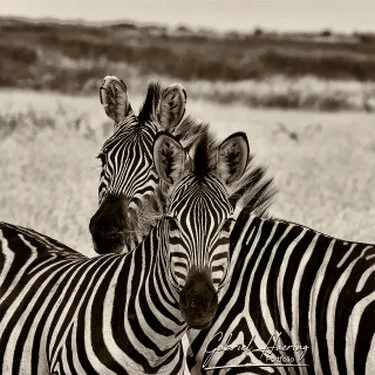
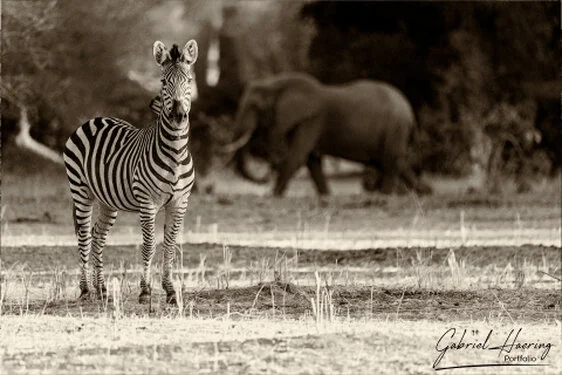
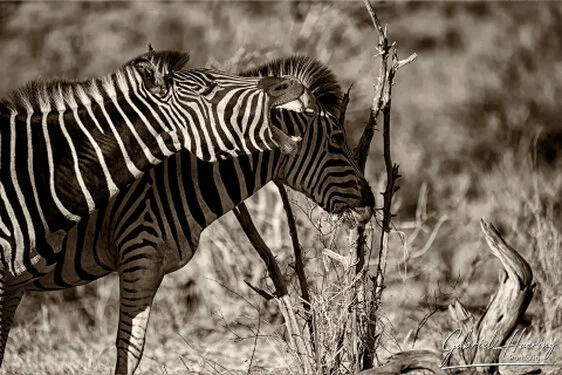
A single animal separated from the group creates a very different image from two zebras standing closely together or a herd moving across open land. These relationships provide opportunities to explore balance, repetition and visual tension.
Movement, Awareness and Resilience
Zebras survive through vigilance, speed and collective awareness.
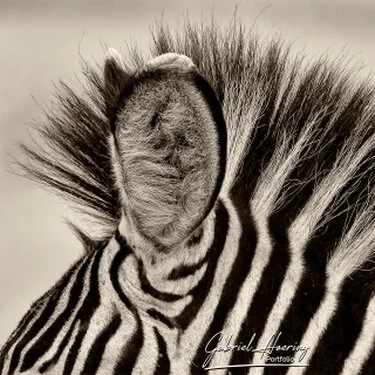
Even while grazing, their posture often communicates readiness. In black and white, this tension can be expressed through the direction of the ears, the position of the legs and the spacing between animals.
The photographs in this gallery present zebras not simply as decorative animals, but as resilient and highly adapted members of the African ecosystem.
Finding Graphic Compositions in Nature
Zebra photography teaches the importance of framing, timing and separation between subjects.
See how natural pattern, animal behaviour and composition influence my broader photographic approach.