

Elephants
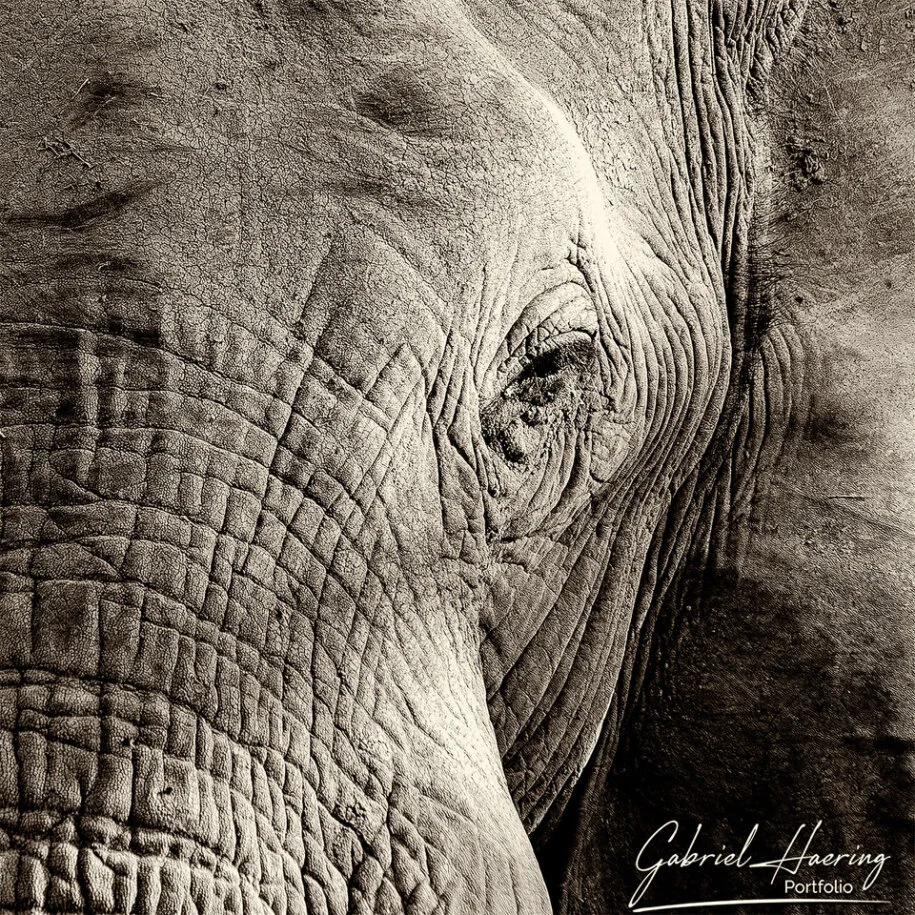
In a close portrait I tend to look at the eye first. The folds of the skin give the light somewhere to settle. A wider photograph of a family group lets me pay attention to how the animals move together.
View elephant photography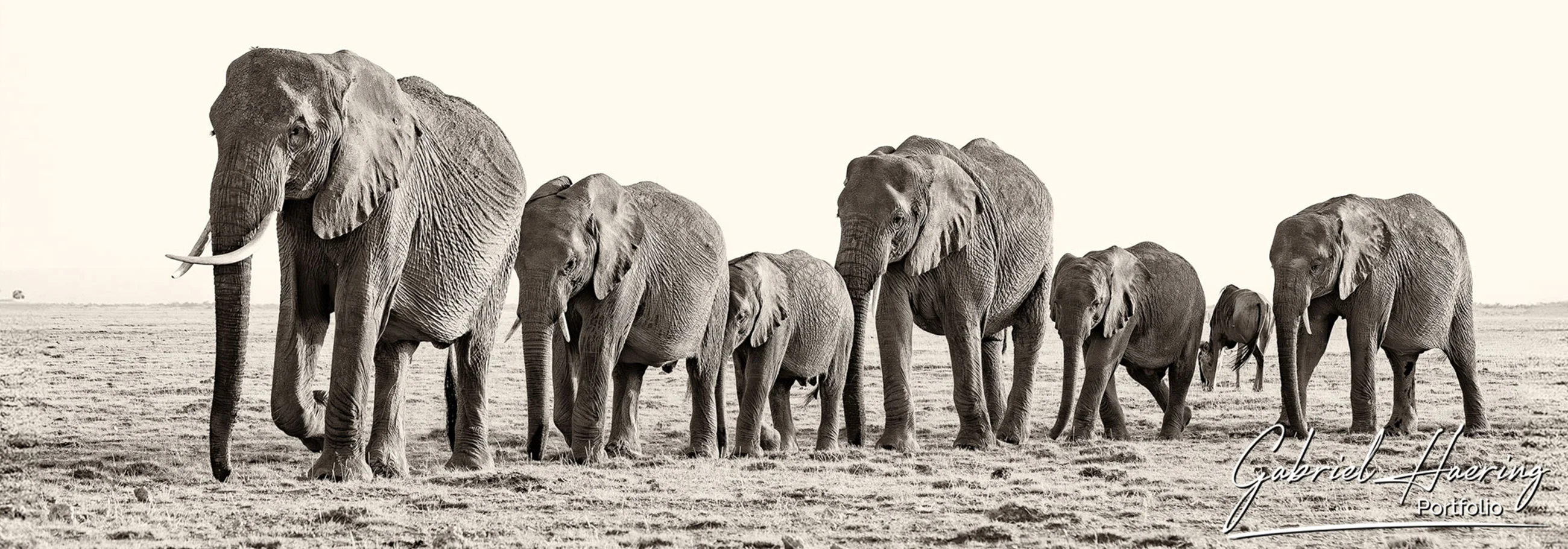
I’m Gabriel Haering. I make most of my photographs in colour. Sometimes, before I press the shutter, I already see the picture in black and white. It might be the light catching the folds of an elephant’s skin or the way a zebra’s stripes stand out in shadow. My B&W wildlife photography portfolio brings together work from Kenya, Tanzania, Botswana, Namibia and Zimbabwe.
What I enjoy about monochrome wildlife photography is how much there is to notice in a quiet frame. The edge of a buffalo horn, the stripes on a zebra’s face or a line of shadow across an elephant’s skin can carry a photograph. I’ve arranged these galleries by subject so you can see how those details change from one animal to the next.
In a close portrait I tend to look at the eye first. The folds of the skin give the light somewhere to settle. A wider photograph of a family group lets me pay attention to how the animals move together.
View elephant photography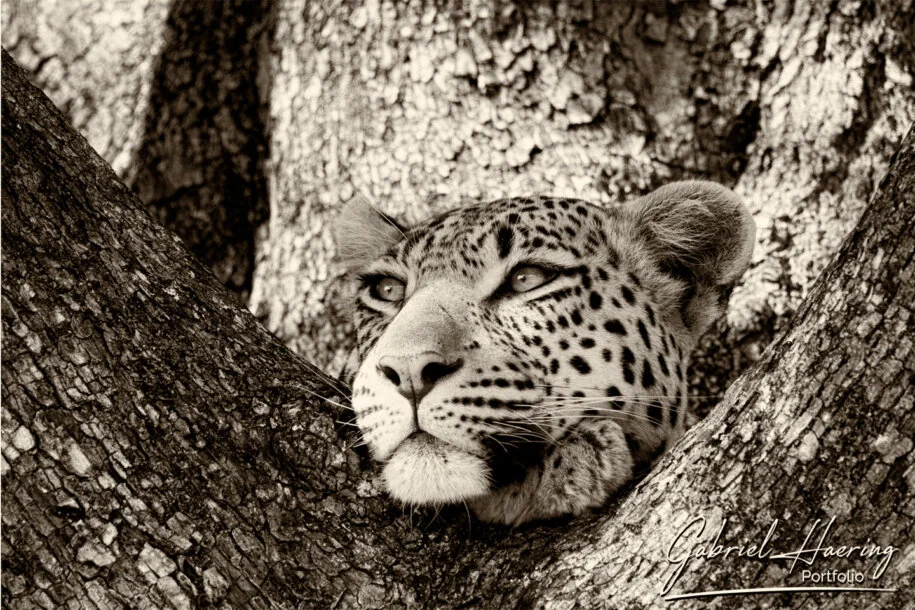
In this portrait, the fork of the tree frames the leopard’s face and a little light catches its eyes. In the rest of the gallery, I follow lions, leopards and cheetahs through quieter moments as well as movement.
View African cats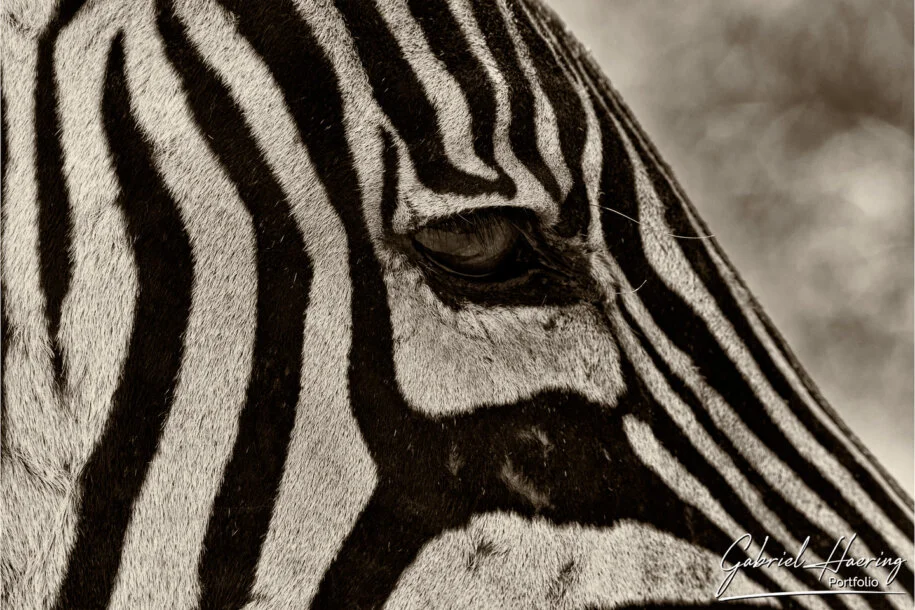
I like the way the stripes lead my eye from the face into the rest of the picture. When zebras stand together, a small shift in position can make their outlines come apart or turn several bodies into one pattern.
View zebra photography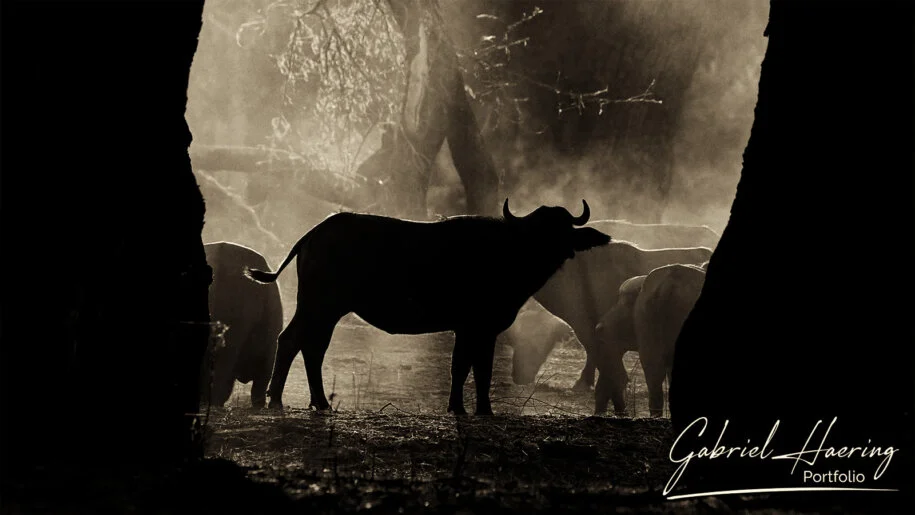
The curve of the horns is the first thing I see in this frame. Then the faces behind them emerge from the shade. In the herd photographs, those differences between light and shadow help me keep a sense of depth.
View buffalo photographyMonochrome nature photography gives me a reason to spend time on the spaces around the animals. I look at where a horizon divides the picture, where water reflects the sky and how clouds change the weight of a scene. Sometimes a single tree is enough to show the scale of a plain.
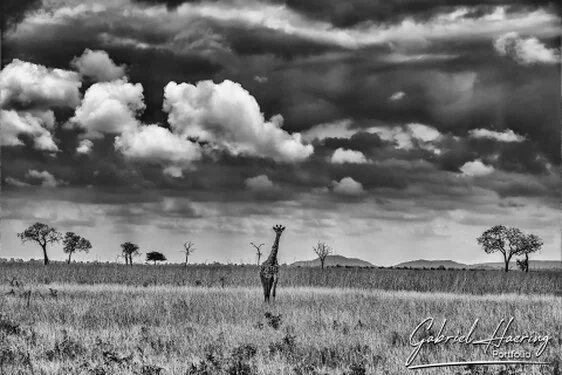
In the photograph here, the giraffe takes up very little space. I like how its silhouette gives the open grassland and the bank of clouds a sense of scale. You’ll find similar shifts between detail and distance in the gallery’s wetlands, shorelines and open country.
I started with film and made my own prints in a darkroom. Watching an image appear on paper taught me to pay attention to what the light brings forward and what the shadows let recede. I still ask myself the same question when I edit a digital file. Where does my eye go first?
Out in the field, I often wait for a small change. A head turns, two animals move apart, or a cloud softens the light on a face. If I can already see the scene in black and white, that helps me decide how much of the surroundings to include while I’m still looking through the viewfinder.
In other photographs, colour is part of what I want to remember. The warm dust, the green of a riverbank or the last light on the plains can tell me as much about a place as the animals themselves. You’ll find that side of my work in my colour wildlife photography portfolio.
On the photographic safaris I accompany, we spend time watching how animals move and how the light changes around them. If you want to work on your own compositions in the field, you can see the journeys I lead on my Africa Photography site.