

Wildlife
Encountering African elephants in the wild is never a neutral experience. Photographing them across Botswana, Namibia, Kenya, Zimbabwe, and Tanzania has repeatedly confronted me with a form of strength that is both overwhelming and deeply measured.
Elephants dominate space effortlessly. Their size alone commands attention, yet what strikes me most is not only their mass, but the control they have over it. Each movement — a slow step forward, the swing of a trunk, the protective positioning of a family group — feels deliberate and purposeful. Strength, in elephants, is not impulsive. It is restrained, conscious, and aware of consequence.
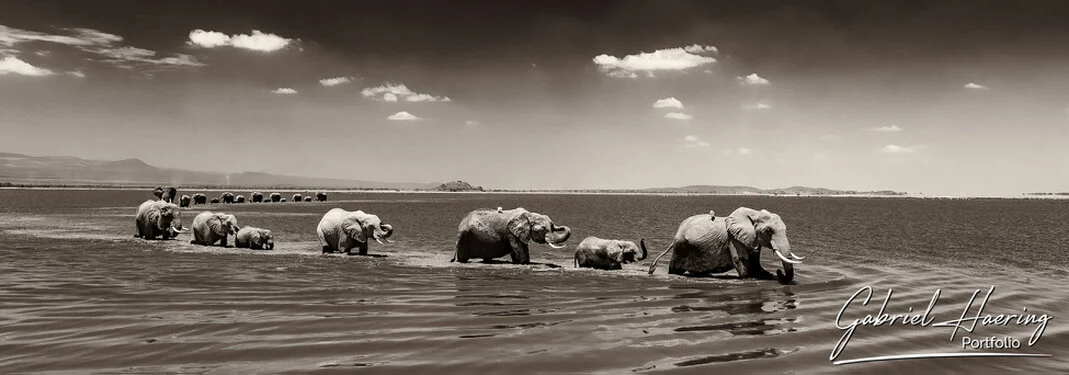
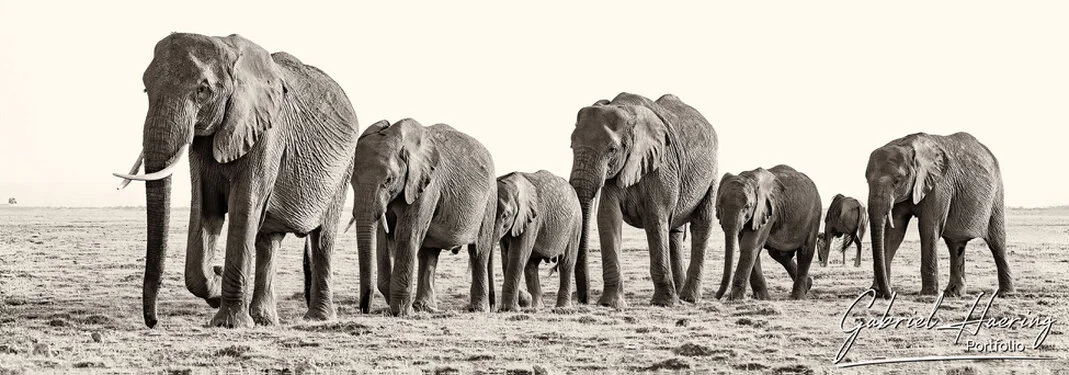
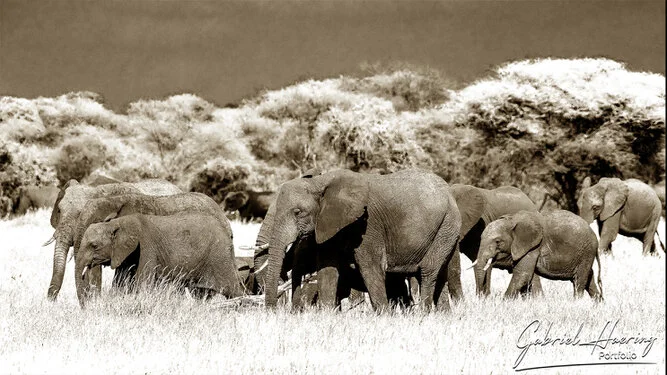
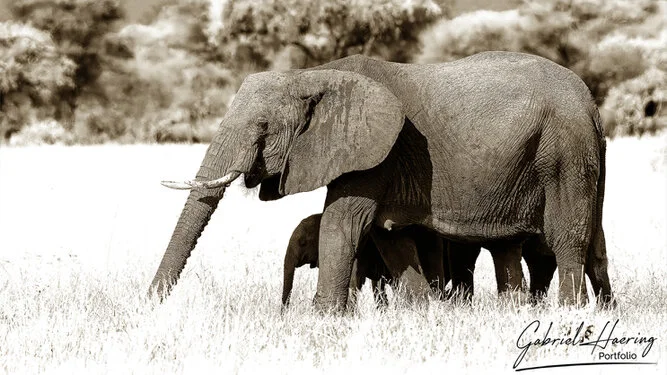
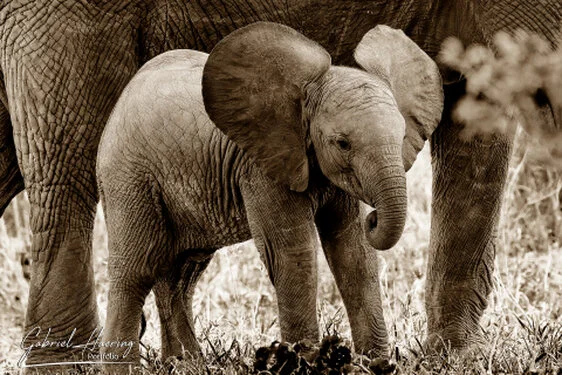
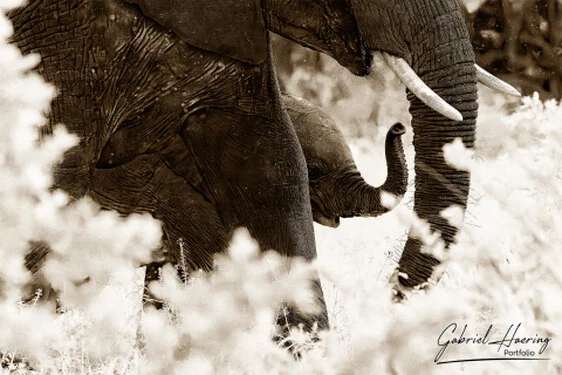
Working close to elephant families has been particularly powerful. There is an unmistakable structure within the group: calves sheltered between adults, older individuals guiding direction, subtle physical contact reinforcing bonds. Elephant society is built around memory, experience and learning. Matriarchs guide herds through landscapes they have known for decades, remembering routes, water sources and places of refuge. Photographing these moments requires patience, distance and respect, but also trust in the rhythm of the herd.
Black and white as a language of presence
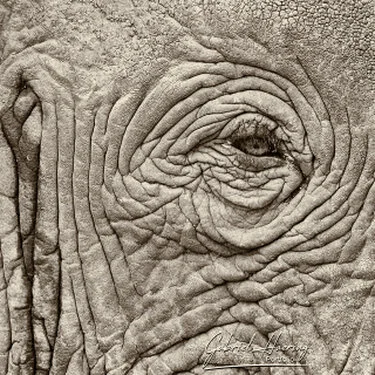
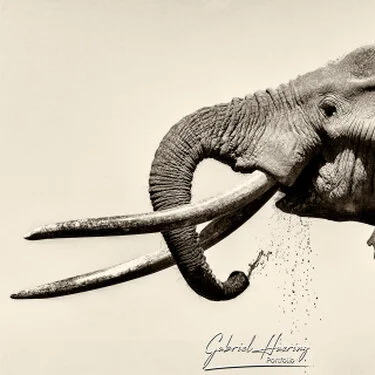
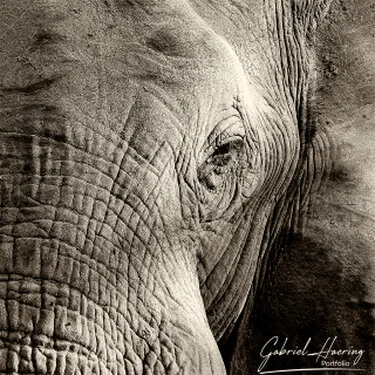
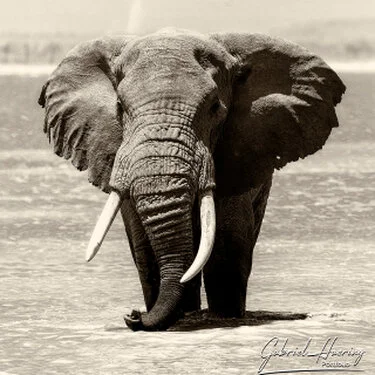
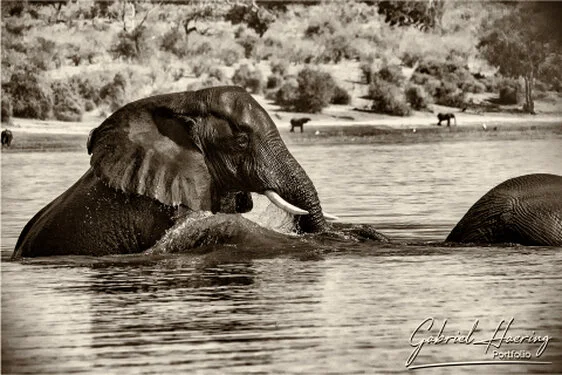
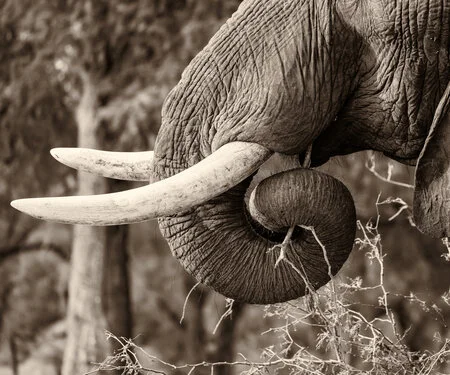
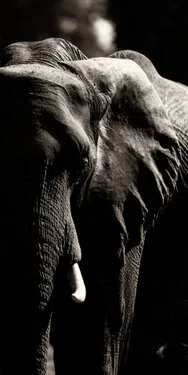
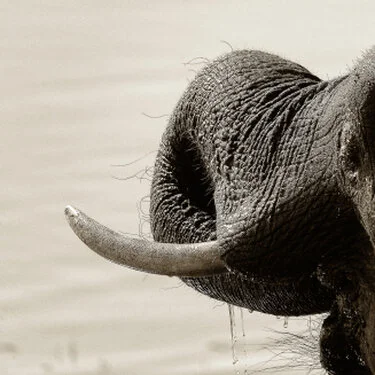
In portrait and detail images, black and white photography allows me to focus on texture and expression: the deep creases of the skin, scars accumulated over decades, dust caught in wrinkles and eyelashes, the curve of a tusk, the weight of a trunk. Without colour, the images reveal time itself — a record of survival, experience and endurance written onto the body.
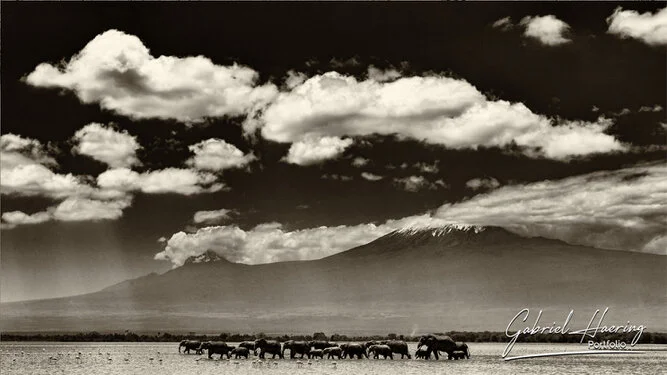
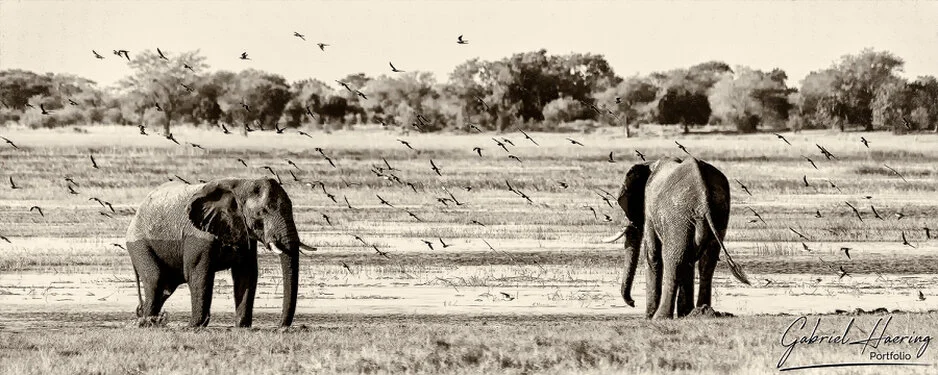
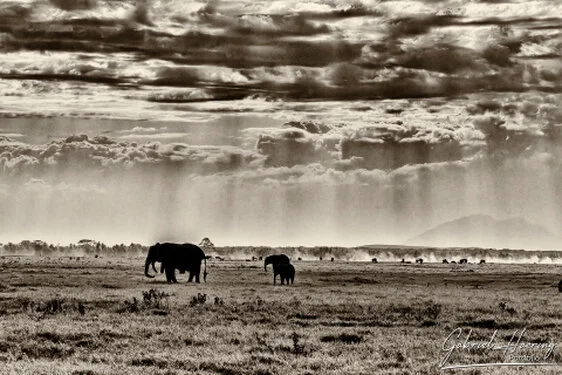
Monochrome photography also removes distraction. It simplifies the frame and brings attention back to form, light, shadow and emotion. The rough surface of the skin becomes almost sculptural. The eye becomes more intense. A family group crossing open land becomes a study of protection, movement and connection.
Intelligence, memory and family bonds
There is a quiet emotional presence in elephants that I have rarely encountered elsewhere in the animal world. Their eyes, their interactions and even their stillness suggest an awareness that goes far beyond instinct. Elephants communicate through sound, body language, touch and vibration. They maintain complex social bonds and show a level of sensitivity that makes every photographic encounter feel meaningful.
Standing before them, camera raised, I am always conscious that I am observing an animal that remembers landscapes, routes and relationships. This is one of the reasons why elephants have become such a central subject in my wildlife photography: they combine physical power with intelligence, vulnerability and emotional depth.
Photography, awareness and conservation
World Elephant Day, celebrated every year on 12 August, is dedicated to raising awareness about the protection of elephants and the challenges they face in the wild. It is a day to reflect on their ecological importance, their intelligence, their complex social lives and the urgent need to preserve the habitats on which they depend.
Elephants are not only among the most iconic animals of Africa; they are also vulnerable giants whose future is threatened by habitat loss, human-wildlife conflict, poaching and the fragmentation of their natural landscapes. World Elephant Day reminds us that their survival depends on space, protection, coexistence and long-term conservation efforts.
Photography can play a small but important role in this awareness. A powerful elephant image invites the viewer to slow down, look more carefully and see the individual behind the species. A close portrait, a matriarch leading her family, a calf protected between adults, or a weathered old bull carrying the marks of time — each image can become a reminder of what is at stake.
Elephants are also keystone species. By opening paths, shaping vegetation, dispersing seeds and influencing entire ecosystems, they help maintain the landscapes they inhabit. Their presence is ecological, emotional and symbolic at the same time.
For me, elephant photography is therefore not only about documenting wildlife. It is about creating a visual connection — a way to celebrate their strength, intelligence, memory and vulnerability, while also encouraging respect for their protection.
From the field to fine-art photography
A dedicated elephant photography exhibition held during 2024–2025 presented a curated selection of fine-art elephant images, focusing on individuality, family structures, intergenerational bonds and the contrast between power and vulnerability. This portfolio continues that same visual approach in black and white.
These photographs are my interpretation of African elephants as I experience them in the wild: immensely strong yet composed, physically dominant yet socially refined, vulnerable yet enduring. They are an expression of power shaped by intelligence, memory, family and connection.
In black and white, the elephant becomes more than an animal portrait. It becomes presence, history and silence.